
PTSD Neurofeedback Training
Data-informed, non-medication neuro therapy supporting trauma recovery, emotional regulation, and nervous system safety through non-invasive care.
We take direct Deposits
From Most Major Insurances








Neurofeedback Treatment for PTSD in Calgary AB
Areas We Impact
PTSD Neurofeedback Therapy in Calgary, Alberta, Canada
Data-Informed Support for Trauma, Hypervigilance & Emotional Regulation
Trauma leaves lasting effects on the nervous system, not just the mind. Feeling stuck in survival mode, easily triggered, or emotionally disconnected is often the brain’s way of trying to maintain safety.
At Calgary Mind & Wellness Clinic, we use advanced assessments and personalized, non-invasive neuro-based approaches to support the nervous system in unwinding trauma-related patterns and restoring a sense of internal safety—naturally. Our focus is on helping the brain develop new, more adaptive responses rather than remaining reactive to past experiences.
Why Our PTSD Neuro Therapy Approach Works
While many traditional approaches emphasize cognitive processing alone, our work centers on physiological integration—supporting reconnection between the brain and body where trauma has disrupted regulation.
-
No medication
-
No re-living traumatic events
-
Structured, brain-based regulation
Common Trauma-Related Responses We Support
When trauma disrupts nervous system regulation, individuals may experience:
-
Ongoing anxiety or hypervigilance. Emotional numbness or shutdown
-
Nightmares, flashbacks, or racing thoughts
-
Emotional outbursts or overwhelm
-
Sleep disruption or restlessness
-
Difficulty relaxing, trusting, or feeling safe
These responses are not personal failings, but protective survival patterns the nervous system has not yet been able to release.
Book Your Appointment
Read Our Blog

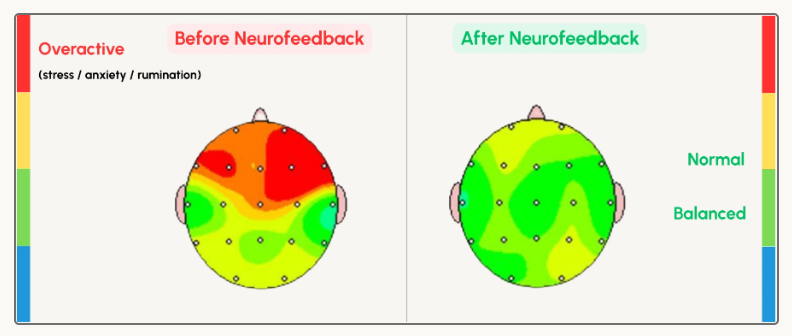
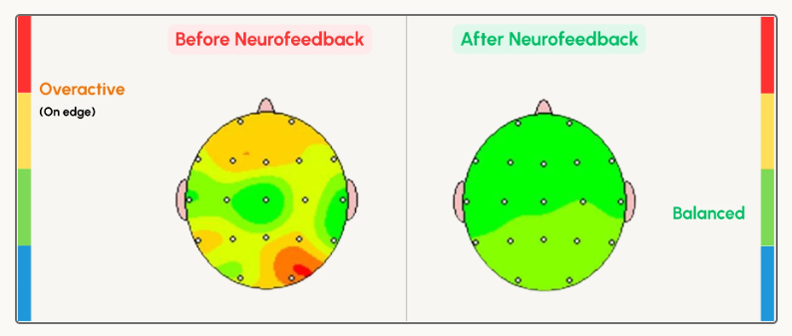
Clients Brain Progress After a Neurofeedback Program
Most clients feel an instant ‘aha’ moment when they see how their brain is overactive in certain areas leading to symptoms like anxiety. With Neurofeedback we train your brain from being overactive to calm and balanced with non-invasive approach.
Comprehensive Assessment
Our initial step involves a thorough evaluation to understand your brain’s functioning.
- qEEG brain mapping (to assess the function of key areas of the brain)
- Vestibular & proprioception testing (these systems are often dysregulated when Sensory Integration issues or Sensory Processing Disorder are at play)
- Primitive reflex assessments
- Thalamic timing assessments, using an Interactive Metronome assessment
- Oculomotor capability assessment
- Autonomic Nervous System assessment (using pupillometry to assess the balance of the sympathetic to parasympathetic balance/ratio)
Personalized Neuro Program
Based on your assessment, we craft a tailored 36-session program.
- Neurofeedback
- Virtual Reality Therapy
- Biofeedback
- Vagus Nerve Stimulation
- Vestibular / Balance Therapy
- Proprioceptive / Cerebellum Therapy
- Cranial Electrical Stimulation (both tACS and tDCS)
- Oculomotor Eye Exercises
- Primitive Reflex Exercises
- Hemispheric Co-activation
- Photobiomodulation (Red Light Therapy)
- VieLight
Progress Monitoring and Adjustment
We regularly reassess your progress to ensure optimal results.
- Follow-up Functional Neuro Assessments™ and any needed program adjustments or protocol changes based on progress
- Functional performance check-ins
- Ongoing analysis to ensure you’re progressing at the right pace
This ensures your care remains personalized, precise, and effective over time.
Building Long-term Resilience
Our final phase focuses on enhancing your resilience.
- Greater emotional stability
- Improved stress response and adaptability
- Sharper cognitive function and mental clarity
- A stronger foundation for long-term brain and nervous system health
This phase isn’t just about short-term change—it’s about lasting change, where your system has now developed new strategies and greater function, allowing you to stay balanced and regulated under real-life pressure.

Neurotherapist
Dr. Courtney Dookie is a dedicated neurotherapist at Calgary Mind Wellness Clinic, bringing a wealth of knowledge and expertise to her practice. With advanced degrees in neuroscience and psychology, Dr. Dookie has a profound understanding of the brain’s complexities and its impact on mental health. She is passionate about continuous learning and actively participates in professional development to stay abreast of the latest neurotherapeutic techniques and research.
Dr. Dookie employs a variety of innovative approaches tailored to each client’s unique circumstances, fostering a supportive and safe environment where individuals can embark on their journey of healing and self-discovery.
Frequently Asked Questions
Discover answers to some of the most frequently asked questions about our services and approach at Calgary Mind & Wellness Clinic. We aim to provide clarity and support for your mental health journey.
Are the changes permanent?
Short answer? Yes.
Long answer: Once your brain learns how and when to produce a certain brain wave, that ability becomes embedded as a new, permanent circuit. This process is known as neuroplasticity.
How many treatment sessions will I need?
The typical patient usually requires 30 Brain Training sessions to ensure permanent neuroplastic changes.
Can Brain Training heal the damage from a stroke / brain injury / Lyme disease?
To varying degrees. Brain training takes best advantage of the brain’s ability to use adjacent neuronal pathways to take over the function of the damaged/dysregulated area.
Also, the VieLight is a powerful tool to increase the function of each neuron at the mitochondrial level, allowing each brain cell to have more energy for healing and repair.
Can Brain Training slow the progression of Alzheimer’s and/or Parkinson’s Disease?
For more information on this topic, please visit our Alzheimer’s page.
What other issues can Brain Training help with?
Brain Training has been shown to help with a wide range of challenges, including:
Addiction
Asperger’s
Insomnia
Anger management
Panic attacks
Stress disorders / PTSD
Memory loss
Chronic pain
Bipolar Disorder
OCD
Autism spectrum
Anxiety
Depression
ADD / ADHD
Learning challenges
Dyslexia
Dyscalculia (Math / Numbers difficulty)
Additionally, it can be used to achieve peak performance in all areas of life. Athletes, students, musicians, doctors, and business owners alike use Brain Training to improve their mental clarity and physical capacities. In fact, it’s even used by NASA and for U.S. Olympic training.
If you’ve got an issue and suspect Brain Training could help, go ahead and schedule an initial Brain Mapping session today—or give us a call. We’re happy to answer any questions you have.
How do I know if brain training will help my child?
This is why we do an initial Brain Mapping session before we create a treatment plan. The Brain Map shows the location and extent of any dysregulation in your child’s brain wave patterns.
From there, we can gauge how effective Brain Training is likely to be.
Dr. Dookie has been doing this a long time, and your child’s optimal health is his #1 priority. If Sensorium Neuro Wellness can help, he’ll explain everything. If not, he’ll explain that too.
What what does it mean to be "natural" and "non-invasive"?
A natural treatment works in concert with the body’s innate ability to heal and be well. In other words, it helps the body (or in this case, the brain) do what it’s already programmed to do, only better.
Importantly, nothing is put into the body at any time — no electricity, no shocks, no subliminal messages. 😉 Instead, brainwaves (which are already active) are simply being observed and reflected back to your brain in real time through auditory and visual feedback — sometimes while you just sit and watch a movie. For more info: click here
Isn't brain training just neurofeedback?
Yes and no.
Neurofeedback is often the most powerful component of our treatment plan. However, we’ve developed a more well-rounded approach at Calgary Mind and Wellness Cliniuc, so we have a wide range of leading-edge “tools” that help restore balance to the brain’s functionality.
In addition, our treatments include auxiliary therapies such as AVE, Em-Wave, and Vie-Light, which increase the neurofeedback’s effectiveness.
What is the focus of your neurotherapy approach?
Our neurotherapy focuses on understanding and improving the communication between the brain and nervous system. We use non-invasive methods to address issues such as anxiety, ADHD, and depression by retraining the brain for better regulation and calmness.
How does your clinic support individuals with ADHD?
We offer natural neurotherapy for ADHD, focusing on how the brain processes information. Our approach uses advanced tools to assess and guide the nervous system towards healthier patterns, improving focus and emotional regulation without medication.
Can your services help with autism spectrum-related challenges?
Yes, our clinic supports individuals on the autism spectrum by focusing on nervous system regulation. We aim to reduce the strain of sensory overload and emotional dysregulation, promoting calm and adaptability while honoring individuality.
What is your approach to concussion recovery?
We provide non-medication support for concussion recovery by focusing on how the brain functions post-injury. Our personalized plans aim to improve regulation and performance, addressing challenges like dizziness and brain fog for long-term recovery.
How do you address insomnia and sleep issues?
Our clinic offers a brain-based approach to insomnia, focusing on how the nervous system regulates rest. We use personalized assessments to help shift the system into a calm rhythm, promoting deeper and more consistent sleep without sedatives.
What makes your clinic's approach to depression unique?
We offer a brain-based, non-medication approach to depression, focusing on improving brain-body communication. Our methods address underlying neurological patterns, promoting long-term stability and improved well-being without relying on medication.