Evidence is still developing
Systematic reviews describe promising findings while also noting methodological limitations and the need for larger controlled studies.
EEG and fMRI neurofeedback have been studied for depressive symptoms, but the evidence remains emerging. We present neurofeedback as a possible adjunct rather than as a replacement for established depression treatments.
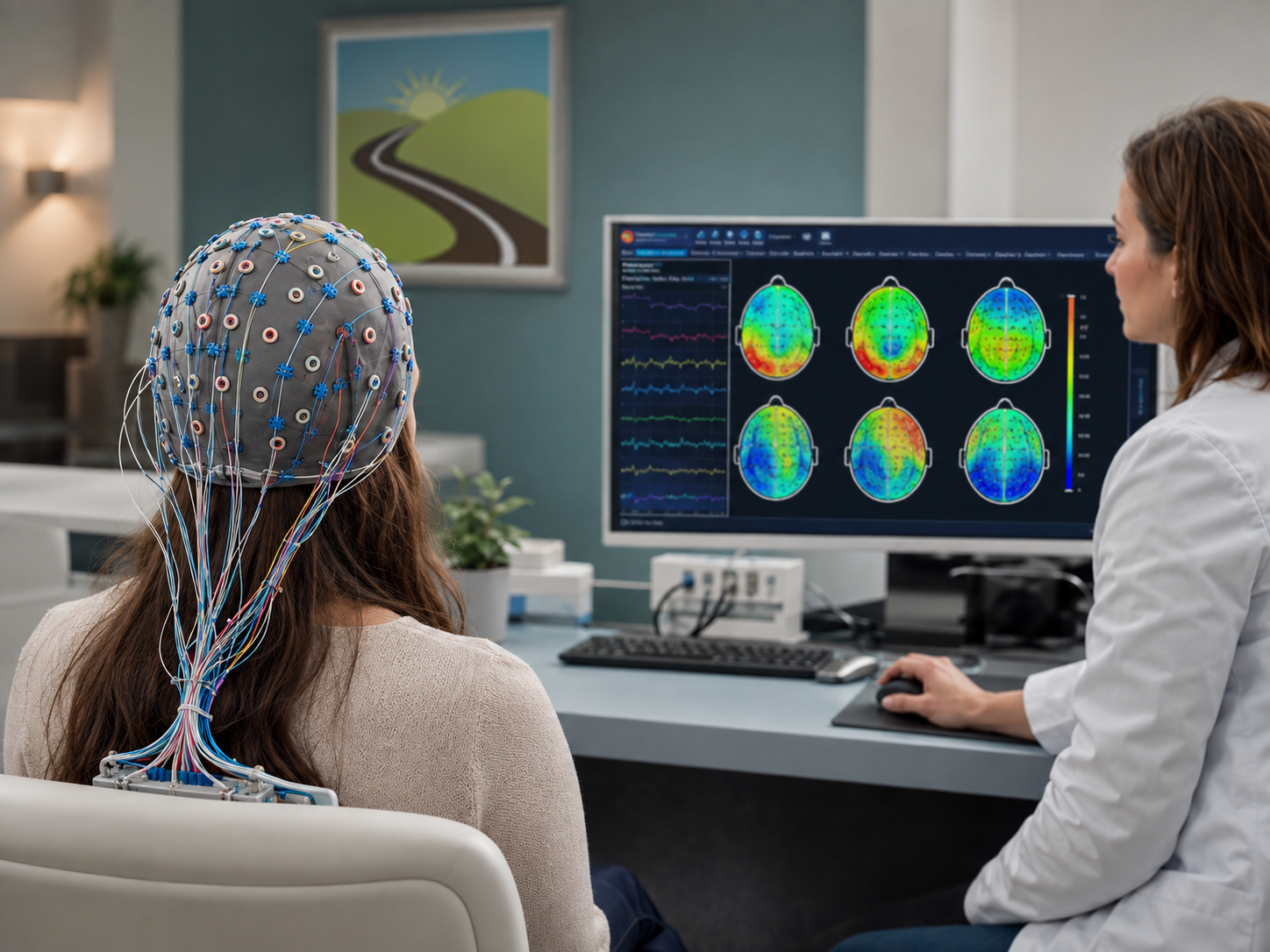
Systematic reviews describe promising findings while also noting methodological limitations and the need for larger controlled studies.
Depression care may include psychotherapy, medication, sleep and activity interventions, medical assessment and other supports. Neurofeedback should fit into that larger picture.
Medication decisions should be made with the prescribing clinician. Neurofeedback should not be presented as a universal replacement.
No. Suitability depends on the person, severity, diagnosis, risk and broader treatment plan.