A child-centered process
We explain the equipment in age-appropriate language and keep sessions structured and predictable. The focus is on training and feedback, not on making a child feel that something is wrong with them.
For children and teens, neurofeedback should be understandable, comfortable and connected to real-life goals. We involve families in defining what progress should look like at home, at school and in daily routines.
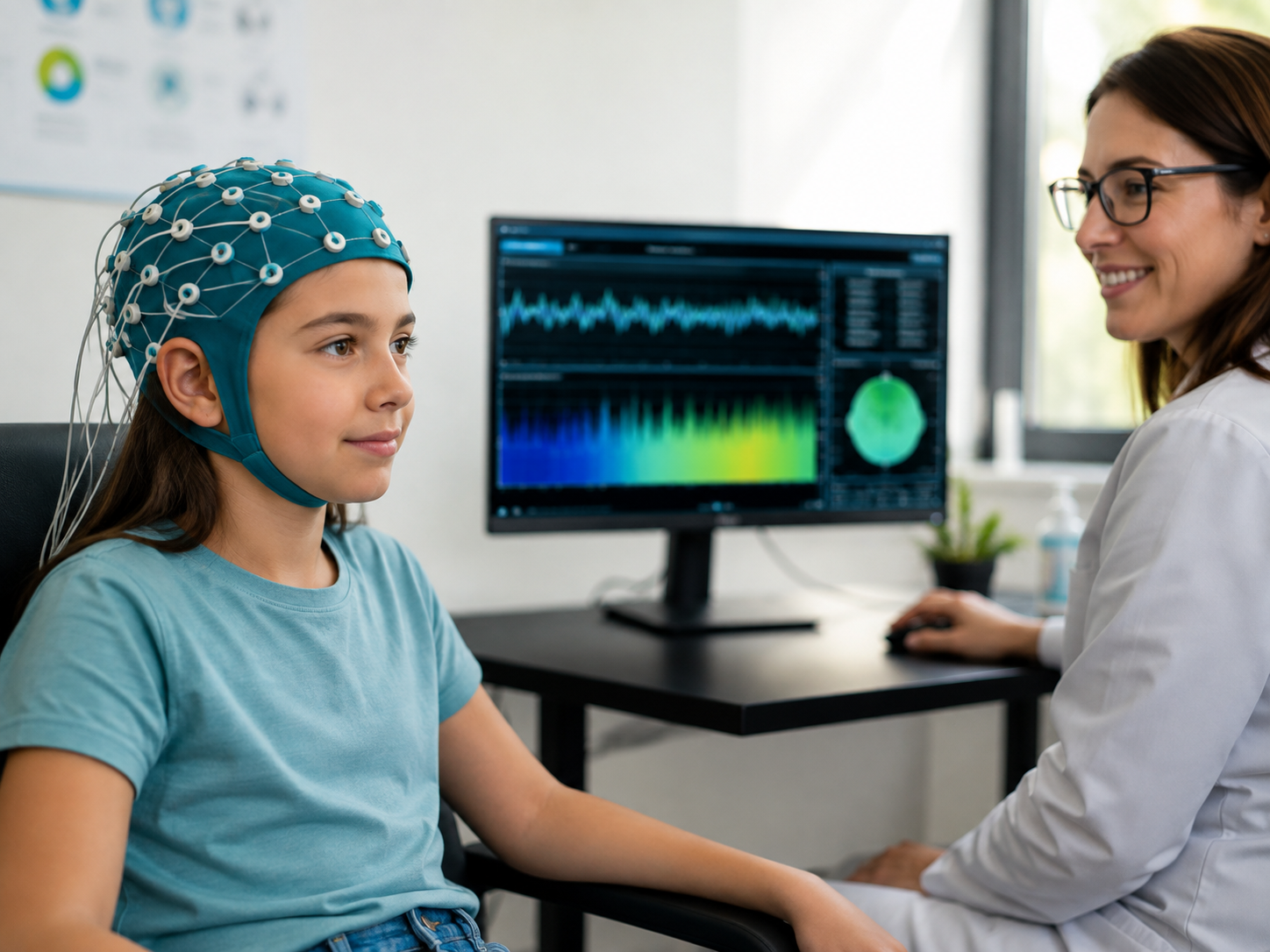
We explain the equipment in age-appropriate language and keep sessions structured and predictable. The focus is on training and feedback, not on making a child feel that something is wrong with them.
We track practical outcomes such as sustained attention, emotional regulation, sleep, transitions, task persistence and family-reported functioning.
No. EEG sensors record activity from the scalp and the process is non-invasive.
Yes. Parent observations can be important for defining goals and reviewing functional change.