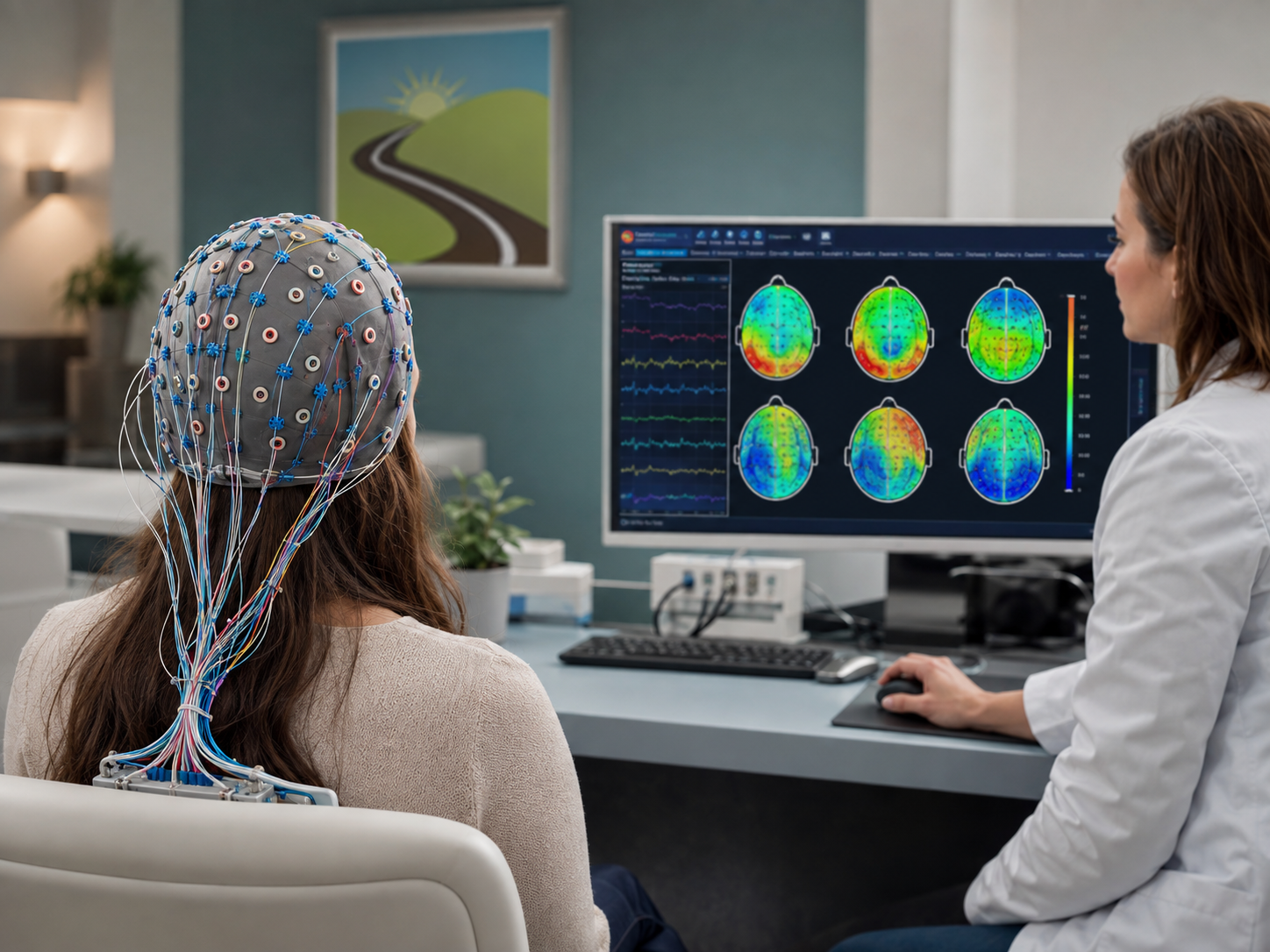
EEG and qEEG start with the same basic signal: electrical activity recorded from the scalp. The difference is mainly in how that recording is analyzed and how the information is used clinically.
Written and clinically reviewed by Dr. Courtney Dookie.Registered Psychologist · Calgary Mind & Wellness Clinic · Last reviewed 2026-08-23. Educational information only; not individual medical advice.
What is a standard EEG?
An electroencephalogram records electrical activity over time using sensors placed on the scalp. In medical settings, EEG is commonly used to evaluate patterns relevant to neurological questions such as seizures and other abnormalities. Interpretation depends on the referral question and the clinical setting.
What does qEEG add?
Quantitative EEG applies mathematical analysis to the recorded EEG signal. Depending on the method, this can include frequency-band activity, relationships between recording sites and comparisons with reference data. The purpose is to describe aspects of the EEG signal in a more quantitative way.
Is qEEG a diagnosis?
No. A qEEG should not be treated as a stand-alone diagnosis of ADHD, anxiety, depression, PTSD or another condition. It can contribute information to a clinical formulation, but symptoms, history, functioning, sleep, medications and other assessment findings remain essential.
How can qEEG relate to neurofeedback?
When clinically indicated, qEEG findings may help inform which EEG features a clinician considers during neurofeedback planning. Neurofeedback itself is the training process; qEEG is an assessment and analysis method.