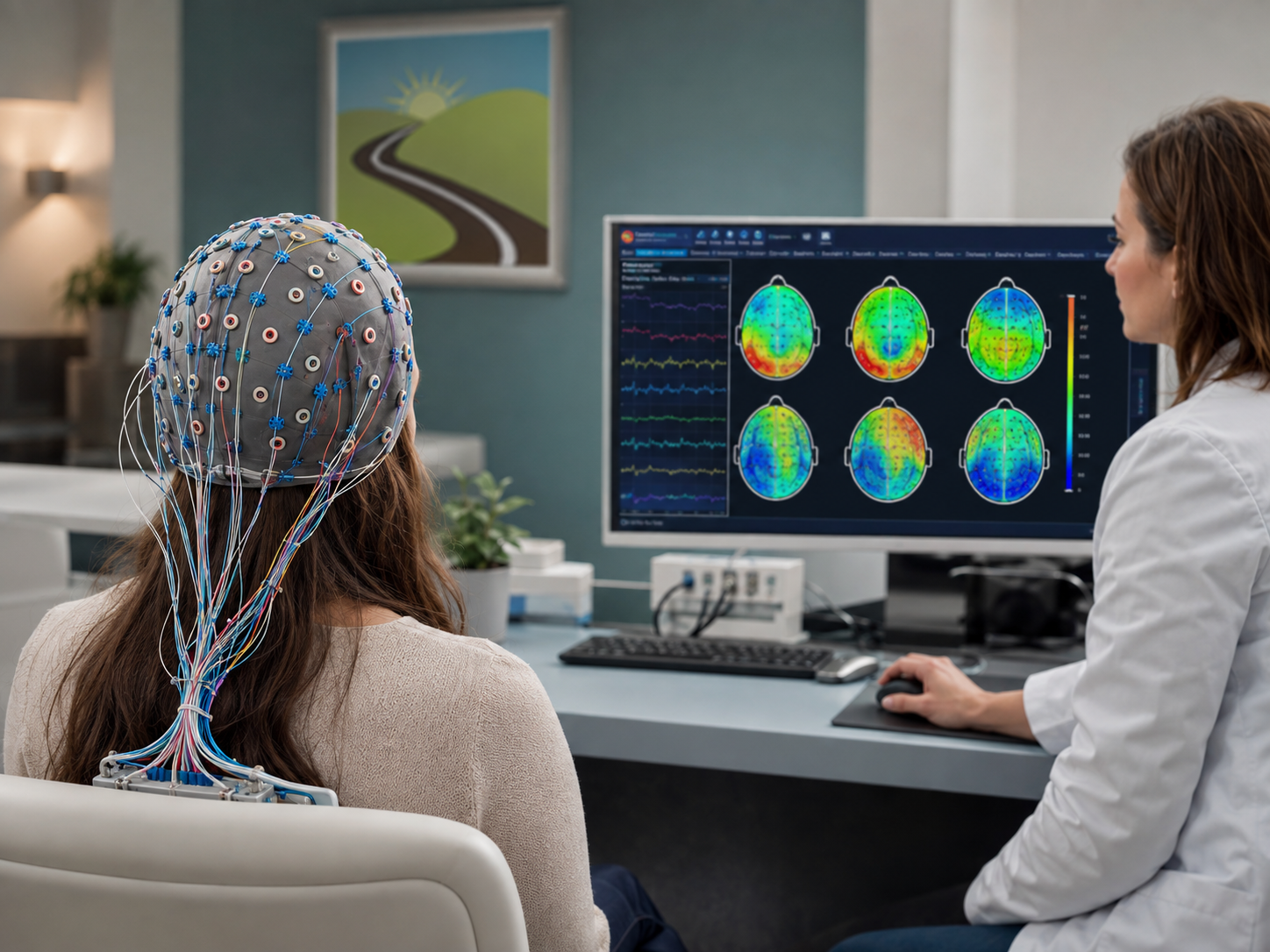
A qEEG is not a photograph of thoughts or a stand-alone diagnosis. It is a quantitative analysis of EEG activity that can add electrophysiological information to a broader clinical assessment.
Written and clinically reviewed by Dr. Courtney Dookie.Registered Psychologist · Calgary Mind & Wellness Clinic · Last reviewed 2026-08-23. Educational information only; not individual medical advice.
What is recorded?
EEG sensors placed on the scalp record patterns of electrical activity over time. A quantitative EEG compares features of that recording, such as frequency-band activity and relationships between recording sites, using appropriate analytic methods and reference information.
What can a brain map contribute?
When the clinical question is appropriate, qEEG findings may help a clinician identify patterns that deserve closer consideration and may contribute to neurofeedback protocol planning. The findings should be interpreted alongside symptoms, history, functioning, medications, sleep, medical factors and other assessment information.
What a qEEG cannot do
A qEEG should not be used by itself to diagnose ADHD, anxiety, depression, PTSD or another mental-health condition. Similar EEG patterns can occur for different reasons, and a colourful map can look more certain than the underlying data actually are. Clinical interpretation matters.
What happens after the recording?
The useful part is not simply receiving a picture. Your clinician should explain the recording in understandable language, discuss whether the findings fit the clinical picture and outline reasonable next steps. Those next steps may include neurofeedback, psychotherapy, medical follow-up, lifestyle changes or another form of care.