Neurofeedback & qEEG Brain Mapping in CalgaryUnderstand the brain.
Understand the brain.
Train regulation.
Personalized, clinician-guided neurofeedback using real-time EEG information to support attention, emotional regulation, sleep, resilience and cognitive performance when clinically appropriate.
Clinician guided qEEG-informed Non-invasive EEG training
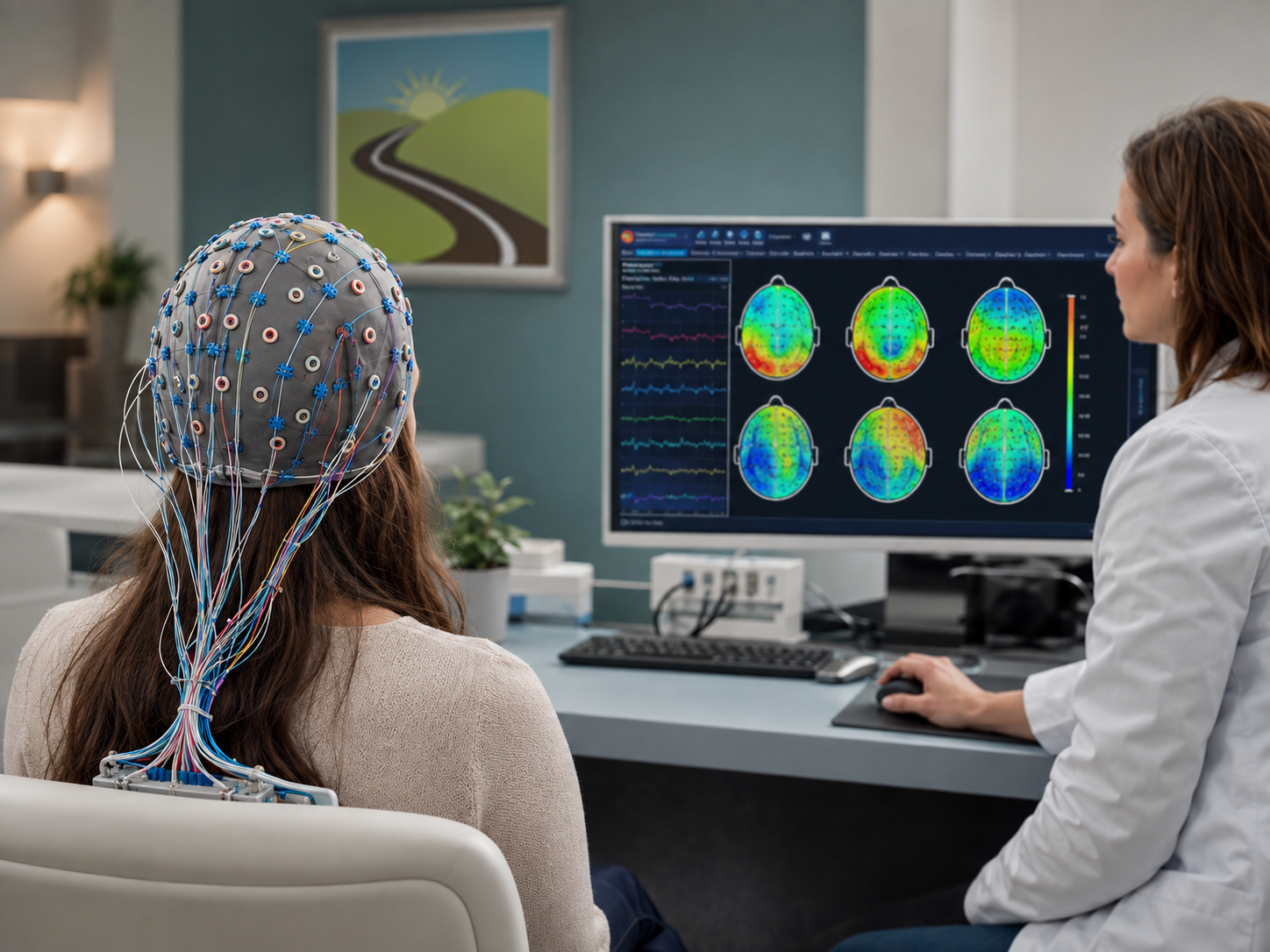
EEG feedbackReal-time brain activity
For adultsIndividualized care
What is Neurofeedback?
Brain training built around feedback, repetition and clinical context.
Neurofeedback, also called EEG biofeedback, measures electrical activity from the scalp and converts that information into immediate visual or auditory feedback. With repeated practice, the brain receives information that can help support more stable patterns of attention, arousal and self-regulation.
At Calgary Mind & Wellness Clinic, neurofeedback is not presented as a one-size-fits-all cure. It is considered within the broader clinical picture, alongside history, symptoms, function and other indicated care.
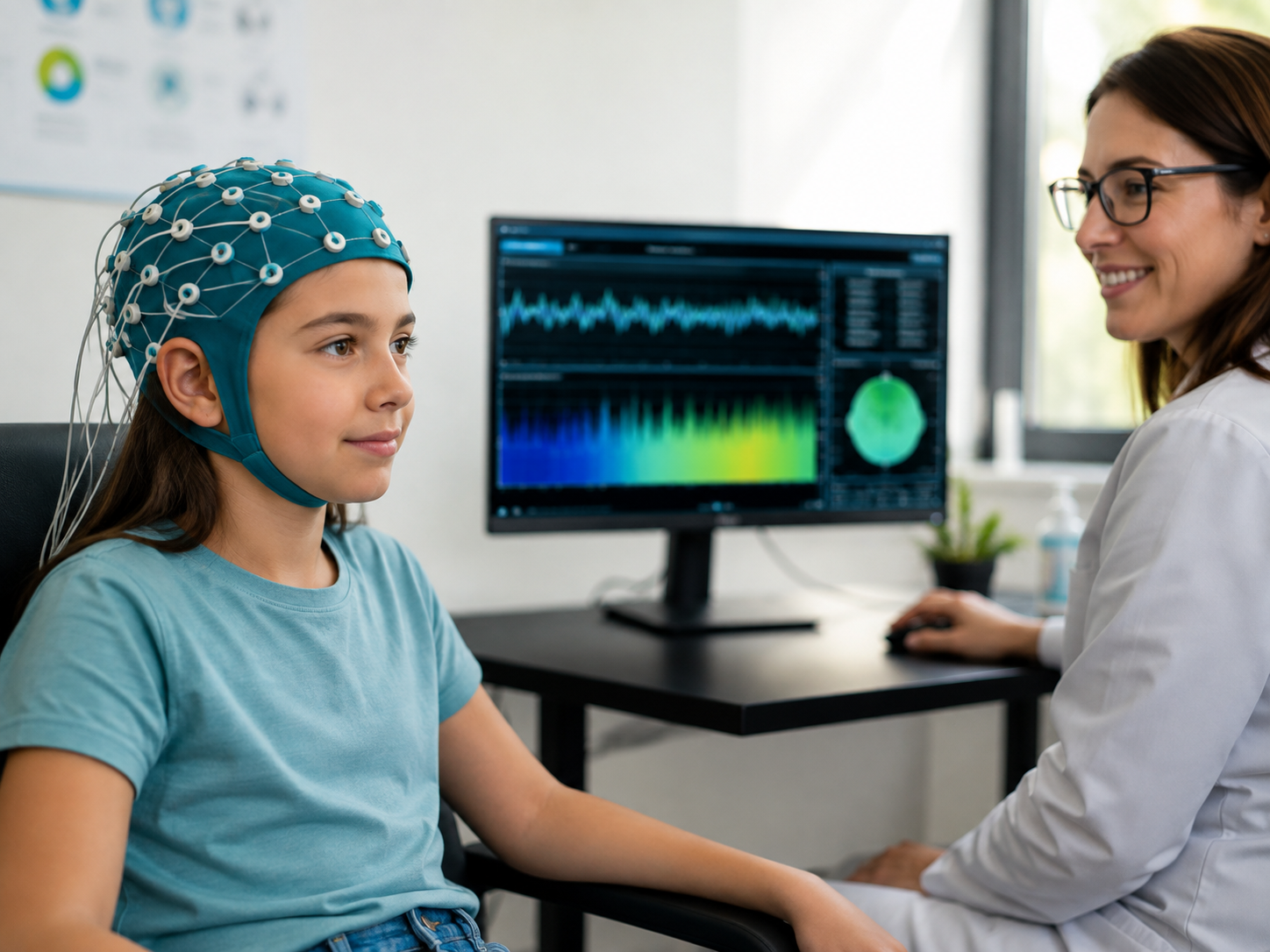 Neurofeedback for children, teens and families.
Why our approach is different
We begin with the clinical question — not a generic protocol.
Your goals, symptoms and functional concerns guide the process. qEEG may be incorporated when it adds useful information to assessment and protocol planning.
- Individualized clinical formulation
- Neurofeedback protocols matched to goals
- Progress reviewed throughout training
qEEG Brain Mapping Calgary
Measure first. Train with a clinical rationale.
A quantitative EEG records electrical activity across the scalp and can help characterize patterns relevant to the clinical question. When appropriate, qEEG findings are integrated with history, symptoms and neuropsychological information — never interpreted in isolation.
- Electrophysiological brain activity data
- Individualized protocol planning
- Progress reviewed alongside clinical outcomes
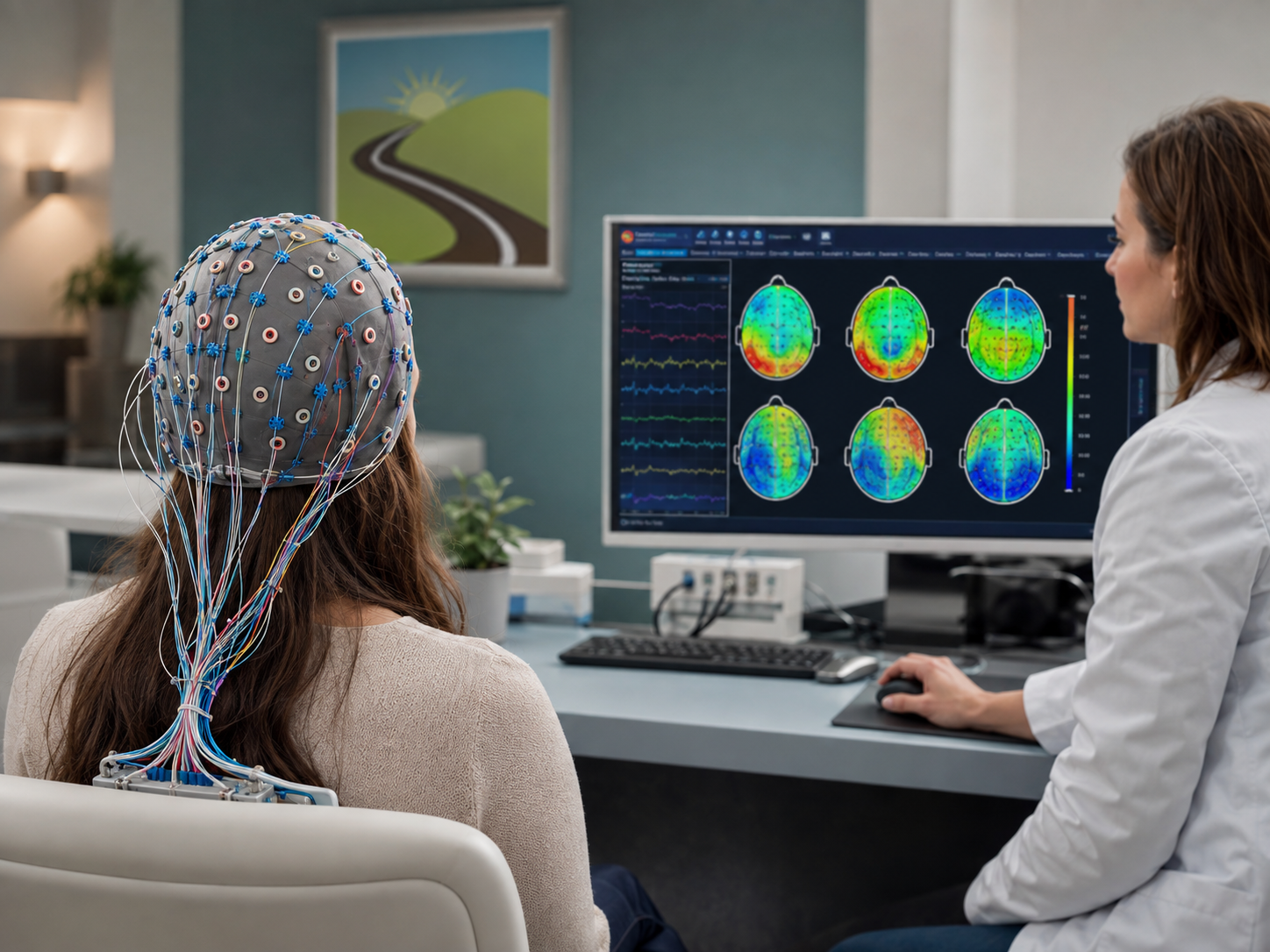
qEEGBrain Mapping
Explore Our Calgary Services
Dedicated neurofeedback and qEEG information for your goals.
Use these focused pages to learn what is known, what remains uncertain, and how each goal fits into individualized clinical care.
Conditions & Goals Studied
Where neurofeedback has been researched.
Evidence strength differs substantially by condition and by neurofeedback method. The labels below are intentionally cautious so you can make an informed decision.
ADHD & Attention
Most studiedAttention, impulsivity, self-regulation and executive-function goals. Research is substantial, while conclusions vary by blinding, protocol and comparator.
View related researchPTSD & Trauma Symptoms
PromisingArousal regulation, intrusive symptoms and trauma-related dysregulation have been studied. Meta-analyses are promising while emphasizing small, heterogeneous studies.
View related researchDepression
EmergingEEG and fMRI neurofeedback have been studied as adjunctive approaches for depressive symptoms. Evidence remains promising rather than definitive.
View related researchAnxiety & Stress Regulation
EmergingBiofeedback and neurofeedback have been studied for anxiety-related symptoms and physiological self-regulation; specific neurofeedback effects remain uncertain.
View related researchChronic Pain & Fibromyalgia
Promising / low certaintyResearch has examined pain intensity, sleep, fatigue and mood-related outcomes, with important limitations in study quality.
View related researchEpilepsy / Seizure Disorders
Adjunctive researchEEG operant conditioning has a long research history in drug-resistant epilepsy. It should never replace neurological or anti-seizure medical care.
View related researchSleep & Insomnia
Mixed evidenceSleep has been studied, but recent meta-analytic findings remain mixed and do not support universal benefit over control conditions.
View related researchAutism-Related Regulation
PreliminaryStudies have explored attention, regulation and behavior in autistic participants. The evidence base remains preliminary and should not be framed as a cure for autism.
View related researchExecutive Function & Cognitive Performance
Performance goalTraining may target sustained attention, working memory, cognitive flexibility, processing efficiency and self-monitoring when clinically appropriate.
View related researchPeak Performance
Performance goalAthletes, executives, students and performers may use neurofeedback to train attention control, recovery and arousal regulation rather than treat a diagnosis.
View related researchClinical scope matters.Neurofeedback is not a substitute for emergency care, neurological management, medication management, psychotherapy or other indicated treatment. Suitability should be determined individually.
Clinical Providers
Experienced care. Personal attention.
Meet the clinicians supporting individualized mental health, neuropsychological and neurofeedback care at Calgary Mind & Wellness Clinic.

Registered Psychologist · Clinical Psychology & Neuropsychology
Dr. Courtney Dookie, PsyD
Dr. Courtney Dookie is a Registered Psychologist with more than 15 years of clinical experience. His work includes psychological and neuropsychological assessment, ADHD, trauma, PTSD, depression, anxiety, executive-function concerns and individualized treatment planning.
His approach integrates psychological science, careful clinical formulation and practical recommendations, with a strong focus on collaborative goals and whole-person care.
Clinical oversight & authorship Book with Dr. Courtney Dookie
Registered Social Worker · Mental Health Therapist
Dr. Sania Dookie
Dr. Sania Dookie is a Registered Social Worker and mental health therapist who works with adults and children experiencing anxiety, depression, trauma, grief and loss, stress, relationship concerns, mood changes and life transitions.
With more than a decade of experience, she draws from CBT, narrative, strengths-based, person-centred and dialectical behaviour therapy within a collaborative and compassionate framework.
Book with Dr. Sania DookieWhat to Expect
Your neurofeedback pathway in Calgary.
Consultation
We clarify symptoms, goals, history, current treatment and whether neurofeedback is clinically appropriate.
qEEG / Clinical Assessment
When indicated, quantitative EEG and clinical information help us understand the patterns relevant to your goals.
Personalized Training
Real-time visual or auditory feedback supports repeated practice of more stable patterns of attention and regulation.
Review & Refine
We review clinical response and functional outcomes and adjust the plan instead of relying on a fixed protocol.
Neurofeedback is a training process, not a one-session procedure.Frequency and number of sessions depend on clinical goals, response to training and the treatment plan developed with you.
Research Library
Read the evidence behind the conversation.
Selected systematic reviews and meta-analyses are linked directly to PubMed or the publisher. This is not a claim that every condition has established first-line evidence.
ADHDNeurofeedback for Attention-Deficit/Hyperactivity Disorder: A Systematic Review and Meta-Analysis2024 · Research articleADHDTreatments for ADHD in Children and Adolescents: A Systematic Review2024 · Research articlePTSDNeurofeedback for post-traumatic stress disorder: systematic review and meta-analysis2023 · Research articlePTSDSystematic review and meta-analysis of neurofeedback and its effect on PTSD2024 · Research articleDepressionEfficacy of bio- and neurofeedback for depression: a meta-analysis2021 · Research articleDepressionEffects of neurofeedback on major depressive disorder: a systematic review2023 · Research articleAnxietyBiofeedback and Neurofeedback for Anxiety Disorders: A Systematic Review2020 · Research articleChronic PainThe analgesic effect of EEG neurofeedback for chronic pain: systematic review and meta-analysis2022 · Research articleEpilepsyNeurofeedback and epilepsy: Renaissance of an old self-regulation method?2024 · Research articleSleepNeurofeedback to enhance sleep quality and insomnia: systematic review and meta-analysis2024 · Research article
Clinician Education
Practical neurofeedback guides from our Calgary clinic.
Local Calgary Care
Neurofeedback and qEEG brain mapping in Calgary.
Calgary Mind & Wellness Clinic serves Calgary and surrounding communities with individualized neurofeedback consultation, qEEG-informed planning and broader psychological care. We focus on clinical reasoning rather than generic protocols.
Calgary Mind & Wellness Clinic301-14 Street NW, Suite 302A
Calgary, AB T2N 1Z7780-978-9010
Calgary, AB T2N 1Z7780-978-9010
Frequently Asked Questions
Clear answers before you begin.
Good care starts with understanding what neurofeedback is, what it is not and how it may fit your goals.
What conditions has neurofeedback been studied for?
Neurofeedback has been studied across ADHD, PTSD, depression, anxiety, chronic pain, epilepsy, sleep difficulties, autism-related regulation and cognitive-performance goals. Evidence varies by condition, so we prefer the term “studied for” rather than claiming neurofeedback is a proven treatment for every diagnosis.
Is neurofeedback effective for ADHD?
ADHD is one of the most studied neurofeedback applications. Some systematic reviews report symptom improvement, while blinded analyses and major clinical guidelines remain more cautious. Neurofeedback should be discussed in the context of established ADHD treatments and individual preferences.
Is qEEG brain mapping the same as neurofeedback?
No. qEEG is an assessment method that records and analyzes EEG patterns. Neurofeedback is the training process. A qEEG may help inform a training protocol when clinically indicated.
Does neurofeedback send electricity into the brain?
No. Standard EEG neurofeedback sensors measure electrical activity from the scalp. They do not deliver electrical stimulation into the brain.
How many neurofeedback sessions will I need?
There is no universal number. Training frequency and duration depend on the clinical goal, baseline presentation, protocol and individual response. Progress should be reviewed throughout care.
Start Here
Choose the right next step.
New to neurofeedback? Start with a consultation. Already in treatment? Book your next neurofeedback session directly.